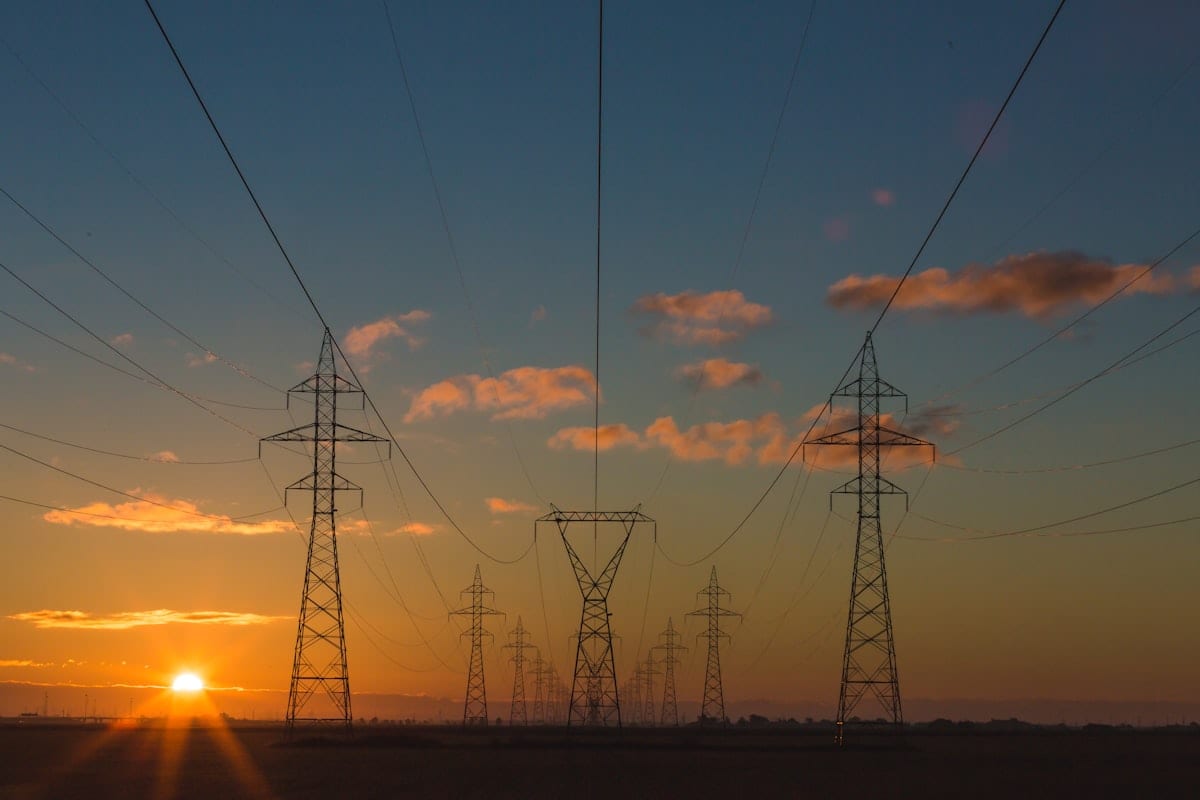
Retail electricity prices in the United States have risen 42 percent since 2019, outpacing the 29 percent increase in the Consumer Price Index over the same period. Data centers now drive 40 percent of all electricity demand growth in the country. The people paying for that expansion are not the companies building it.
That disconnect has triggered something new: organized political resistance to AI infrastructure, at both the state and federal level.
Who’s Actually Paying
Goldman Sachs laid out the math in a February 2026 analysis: data center power demand is adding 0.1 percent to core inflation in both 2026 and 2027. Residential electricity prices have climbed from 12.76 cents per kilowatt-hour in 2020 to 17.44 cents in February 2026, and Goldman projects they’ll reach 19.01 cents by September 2027.
The burden is not equally distributed. A Yale Climate Connections investigation found that while households have absorbed steep price increases, data centers—the customers driving the demand surge—are negotiating bulk discounts that regular customers cannot access. Utilities spent more than $29 billion on rate increase requests in the first half of 2025 alone, double the amount from the same period in 2024.
In the PJM Interconnection, which serves 65 million people across 13 states from New Jersey to Illinois, capacity market prices have spiked nearly tenfold. Some service areas have seen retail electricity increases above 15 percent in a single year.
The Federal Response
On March 25, Senator Bernie Sanders and Representative Alexandria Ocasio-Cortez introduced the AI Data Center Moratorium Act, a first-of-its-kind bill that would ban new AI data center construction nationwide until Congress passes federal AI legislation addressing worker protections, consumer safety, environmental standards, and civil rights.
The bill also proposes banning U.S. exports of AI computing infrastructure to countries without equivalent safeguards.
It is unlikely to pass. The Republican-controlled House and Senate have shown no interest in pausing AI infrastructure. But the bill’s existence marks a shift: the environmental and economic costs of AI are now a mainstream political issue, not a niche concern.
Food & Water Watch provided the ammunition with a comprehensive March 2026 report documenting what it calls “the urgent case against data centers,” cataloging harms from rising utility bills to loss of farmland to noise pollution.
30+ States Are Not Waiting
While the federal bill stalls, state legislators are moving. According to Good Jobs First, lawmakers in more than 30 states have introduced over 300 bills related to data centers in 2026. At least 12 states have filed data center moratorium bills this session.
Some examples:
- Georgia HB 1012 would bar counties and cities from issuing permits for new data centers until March 2027
- Pennsylvania is pursuing a three-year moratorium on hyperscale data center permitting
- Maryland HB 120 would prohibit new data center construction unless the General Assembly passes energy legislation first
- Ohio regulators have already approved new rules requiring data centers to bear enhanced financial obligations for grid infrastructure, after AEP Ohio paused all new data center interconnections due to insufficient capacity
These bills reflect different motivations—some are about electricity costs, some about water, some about property values and noise—but the pattern is clear. Communities that once competed for data centers are now questioning whether the trade-off is worth it.
The 10-Gigawatt Problem
Against this backdrop, SoftBank is building what may become the world’s largest data center at a former uranium enrichment site in Pike County, Ohio. The project’s scale is difficult to overstate.
Ten gigawatts. That’s more than the entire generating capacity of many countries. To power it, SoftBank plans to build 9.2 gigawatts of new natural gas generation—equivalent to nine nuclear reactors—at a cost of $33 billion just for the power plant. The data center itself carries a price tag north of $500 billion.
The first 800-megawatt phase is expected to cost $30 to $40 billion and come online in early 2028. Construction begins this year.
SoftBank CEO Masayoshi Son has framed this as part of a $550 billion U.S.-Japan investment program. The project also connects to the Stargate initiative, a collaboration between SoftBank, OpenAI, and Oracle to build massive AI infrastructure across the United States.
The irony is hard to miss: a project that requires the fossil fuel output of nine nuclear plants, being built in a state where the grid operator has already paused new data center connections because it cannot handle the load.
The Grid Cannot Keep Up
The numbers tell a consistent story. U.S. data centers now draw approximately 41 gigawatts of power—a 150 percent increase over the past five years. That is roughly the combined generating capacity of every nuclear power plant in the country.
The IEA projects global data center electricity consumption could exceed 1,000 TWh in 2026, comparable to Japan’s entire national consumption. The Bloom Energy report predicts U.S. data center demand will nearly double from 80 to 150 gigawatts between 2025 and 2028.
Analysis presented to the PJM Interconnection warns of a 49-gigawatt U.S. generation shortfall by 2028—a gap equivalent to 49 large natural gas power plants.
To bypass these constraints, hyperscalers are cutting direct deals with energy producers rather than buying from the grid like everyone else. Meta’s $115 to $135 billion 2026 capital expenditure budget reflects this reality. But every megawatt that goes directly to a data center is a megawatt that does not flow through the shared grid.
What This Means
The AI power crisis is not a hypothetical. Electricity prices have already risen. Grid capacity is already strained. The political backlash is already underway.
The scale of planned infrastructure—SoftBank’s 10-gigawatt Ohio project alone exceeds many countries’ total capacity—suggests these pressures will intensify before they ease. And the gap between who benefits from AI infrastructure and who pays for it is widening.
Companies are negotiating favorable electricity rates. Communities are absorbing rate increases. Legislators are trying to claw back control. None of these dynamics are compatible with the industry’s narrative that AI infrastructure benefits everyone equally.
What You Can Do
Check your utility’s rate case filings. Most state utility commissions publish rate increase requests online. Look for how data center demand factors into proposed increases in your service area.
Contact your state legislators. Over 300 data center bills are active across 30+ states. Your representatives are hearing from lobbyists—they should hear from ratepayers too.
Support location-based emissions reporting. As we covered in our previous analysis, current accounting lets companies report emissions 7.6x lower than actual figures. Mandatory location-based reporting would force transparency.
Use less cloud compute when practical. Running models locally means your electricity, your grid, your choice. Every query that stays on your hardware is one less query adding to data center demand.
The Bottom Line
The AI industry’s trillion-dollar infrastructure expansion has collided with a basic constraint: the electrical grid was not built for this, and the people plugged into that grid are paying for the upgrade. The moratorium bills will likely fail. The data centers will likely get built. But the political consensus that AI infrastructure is an unqualified good—that era is over.