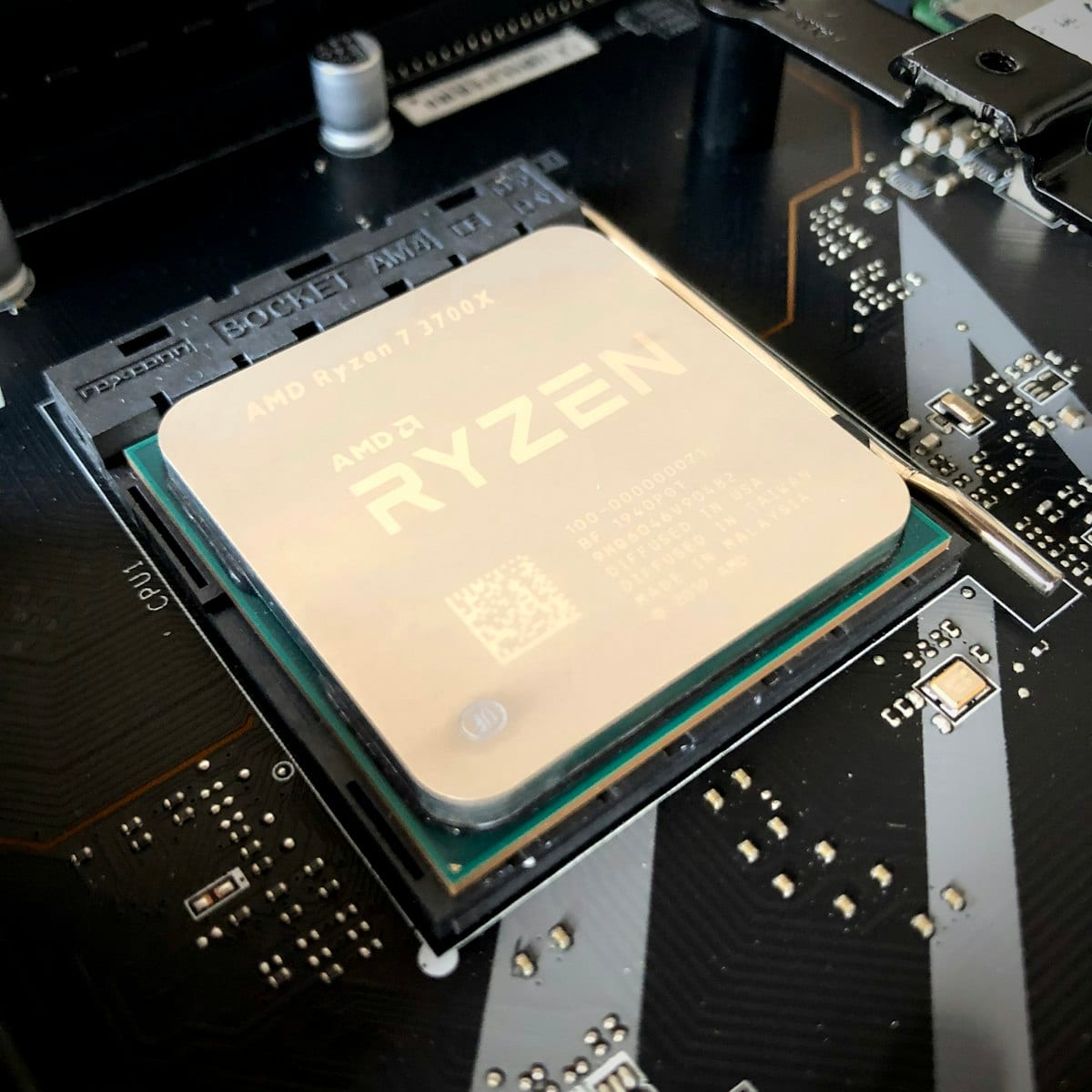
12GB is where local AI goes from usable to genuinely good. A 9B model runs with real context headroom, two smaller models fit at once, and a full speech pipeline runs alongside a chat model. What changed this year is not the tier, it is the models that fill it: the Qwen line moved from Qwen 3 to Qwen3.5, and the vision and text families merged.
Quick Reference
| Use Case | Best Pick | Static weights | Quantisation | Note |
|---|---|---|---|---|
| Chat | Qwen3.5-9B | 5.68 GB | Q4_K_M | Apache-2.0, generous context room |
| Chat (reasoning) | Apriel-1.6-15B-Thinker | 8.79 GB | Q4_K_M | MIT, fits with context room |
| Coding (autocomplete) | Qwen2.5-Coder 14B | 8.99 GB | Q4_K_M | FIM, about 3.6 GiB free |
| Coding (chat) | Qwen3.5-9B | 5.68 GB | Q4_K_M | Current Qwen generation |
| Translation | TranslateGemma 12B | 8.1 GB | Ollama build | Custom Gemma terms, 2K-token input |
| Vision | Qwen3.5-9B + mmproj | 10.45 GB | Q8_0 + mmproj-F16 | About 2.3 GiB left for context |
| Speech (STT) | Parakeet TDT 0.6B v3 | 2.51 GB | fp32 checkpoint | English plus 24 languages |
| Speech (TTS) | Ming-3.0-tts-0.5B | 2.96 GB | weights file | MIT, voice cloning |
| Agents | Qwen3.5-9B | 5.68 GB | Q4_K_M | Or Apriel-1.6-15B for planning |
Updated November 2026.
Local AI by VRAM Tier - 8GB | 12GB | 16GB | 24GB | 32GB
Deep dives: Chat | Coding | Translation | Vision | Speech | Agents | Reasoning | Image generation | Video generation | Embeddings and rerankers | RAG
November 2026 refresh: the text-to-speech pick moves from Step-Audio-EditX to Ming-3.0-tts-0.5B on licence grounds, TranslateGemma’s 2K-token input context is now stated, and coding sizes are given from the published GGUF files. Every VRAM number below is a static weight size with the quantisation named.
Your Hardware
12GB VRAM cards: RTX 3060 12GB and RTX 4070. The RTX 3060 12GB is the long-standing value option because it puts a full 12GB behind a mid-range card, though street prices move constantly and are worth checking before you buy.
How to read the VRAM numbers on this page. Every figure is the static size of the model weights at the named quantisation, taken from published GGUF file sizes, with two exceptions that are labelled where they appear: the Whisper figures are OpenAI’s own required-VRAM numbers rather than weight sizes, and the Step-Audio-EditX figure is StepFun’s stated GPU memory rather than a weight size. The KV cache is allocated on top and grows with context length, so treat each number as a floor, not a total. Anything within 1-2GB of the 12GB ceiling fits with minimal context room. Card memory is binary: a 12GB card holds 12 GiB, which is 12.88 GB in the decimal units file sizes use, so free-memory figures here are worked out in GiB, and the KV cache and runtime overhead come out of that remainder.
The rough math: at Q4_K_M a model needs roughly 0.6-0.8GB per billion parameters, so 12GB comfortably holds the 9-14B class at Q4. Q8_0 on a 9B fits with about 3 GiB to spare, or about 2.3 GiB once the vision projector is loaded.
No card at this tier? Two routes: rent a cloud GPU by the hour to try these models before buying hardware, or use a hosted service; the tool directory compares hosted options by task. For smaller cards, see Local AI by VRAM. The VRAM calculator shows which model builds fit a given card from their file sizes.
Chat & General Assistant
The 12GB chat pick is Qwen3.5-9B, Apache-2.0 and ungated. Static weights are 5.68GB at Q4_K_M and 9.53GB at Q8_0. The qwen3.5:9b-q4_K_M Ollama tag (6.6GB with the vision projector, about 6.15 GiB) leaves about 5.85 GiB of a 12GB card, enough for a 128K-token KV cache (4 GiB at 32 KiB per token) with room to spare. If you prefer quality per token over context length, the qwen3.5:9b-q8_0 tag (10GB, about 9.31 GiB) still leaves about 2.69 GiB.
This replaces the Qwen 3 14B recommendation that stood here. Qwen3.5 is a newer generation, and unlike Qwen 3 it is a unified vision-language model at every dense size, so one download covers both text and images.
Gemma 4 12B (gemma4:12b-it-q4_K_M, 8.0GB, 256K context, Apache 2.0) is the image- and audio-capable alternative at a similar footprint.
Reasoning alternative: Apriel-1.6-15B-Thinker, a 15B dense MIT-licensed model with 131K context. ServiceNow publishes a first-party GGUF: 8.79GB at Q4_K_M, plus a 0.87GB vision projector if you want its image support. The Q4_K_M file is 8.18 GiB, which leaves about 3.8 GiB of a 12GB card for context and runtime overhead, or about 3 GiB with the projector loaded.
Full comparison: local chat model guide.
Coding
Autocomplete: Qwen2.5-Coder 14B, with fill-in-the-middle. Its Q4_K_M file is 8,988,110,272 bytes (8.37 GiB), leaving about 3.6 GiB of a 12GB card for context. The model card lists a full context of 131,072 tokens, but the shipped config is set to 32,768 and longer inputs need YaRN rope scaling. It is an older generation than the chat pick above and is kept deliberately: the newer Qwen releases are general models without dedicated FIM training, so the Qwen2.5-Coder family is still the strongest inline-completion option at this tier. The 7B build, a 4.68GB Q4_K_M file (4.36 GiB), is the choice if you want a second model resident alongside a chat model. DeepSeek Coder V2 Lite (8.9 GB on Ollama) also fits here as a FIM-capable mixture-of-experts alternative, with 81.1% HumanEval reported by DeepSeek against 89.6% for the Qwen 14B.
Chat-based coding: Qwen3.5-9B, the same download as your chat model. For code questions, refactor suggestions and explanations, the current-generation general model beats an older coder-specific one.
Agentic coding does not fit here. The models that resolve real GitHub issues across files start at 16GB and are comfortable at 24GB. At 12GB, keep autocomplete local and reach up a tier for autonomous work.
Full comparison: local coding model guide.
Translation
TranslateGemma 12B is listed on Ollama at 8.1GB (7.54 GiB, about 4.5 GiB free). Its model card lists a “Total input context of 2K tokens”, so long texts should be split into segments rather than sent in one pass. Its technical report puts it at MetricX 3.60 and COMET22 83.5, ahead of the much larger Gemma 3 27B baseline it was measured against. Those figures come from the model’s own authors.
One licensing point that gets glossed over: TranslateGemma ships under Google’s custom Gemma terms with a prohibited-use policy attached, not a blanket open licence. Read them before building a product on it. The Hugging Face repositories are also gated and need a manual access request; the Ollama tags are not.
Full comparison: local translation model guide.
Vision
This is the biggest change on the page. The old recommendation was Qwen3-VL 8B. That family has had no new release since Qwen3.5 shipped: no generative Qwen3-VL repository has been updated since November 2025, while the first Qwen3.5 repository appeared in February 2026. Only the Qwen3-VL embedding and reranker repositories have been touched since.
The pick: Qwen3.5-9B with its vision projector. At Q8_0 the weights are 9.53GB and the mmproj-F16 file adds 0.92GB, for 10.45GB total. That is 9.73 GiB, so it fits a 12GB card with about 2.3 GiB left for the KV cache and runtime overhead, which is limited context room, so budget accordingly. If you need long prompts or a second resident model, the Q4_K_M build plus mmproj is 6.60GB.
Alibaba’s own card states that early-fusion multimodal training “achieves cross-generational parity with Qwen3 and outperforms Qwen3-VL models across reasoning, coding, agents, and visual understanding benchmarks.” The supporting numbers, comparing Qwen3.5-9B against the larger Qwen3-VL-30B-A3B, are self-reported by Alibaba on its own model cards:
| Benchmark | Qwen3.5-9B | Qwen3-VL-30B-A3B |
|---|---|---|
| MMMU | 78.4 | 76.0 |
| MMMU-Pro | 70.1 | 63.0 |
| MathVision | 78.9 | 65.7 |
| MathVista (mini) | 85.7 | 81.9 |
| RealWorldQA | 80.3 | 77.4 |
| MMStar | 79.7 | 75.5 |
| OCRBench | 89.2 | 83.9 |
| OmniDocBench 1.5 | 87.7 | 86.8 |
| CC-OCR | 79.3 | 77.8 |
Treat that table with the scepticism it deserves. Both product lines belong to the same vendor, so this is Alibaba grading its own successor against its own predecessor. No independent confirmation was found: the OpenCompass OpenVLM leaderboard is JavaScript-only and returned no data, and Artificial Analysis runs no vision benchmark for either family.
Two practical caveats. Alibaba publishes no official GGUF conversion for Qwen3.5, only for Qwen3-VL, so every Qwen3.5 GGUF you can download is third-party work such as the Unsloth builds. Runtime support, though, is in place rather than promised: llama.cpp PR #19468 merged in February 2026, verified against Qwen Team preview checkpoints “in both vision and pure text modes (with or without mmproj file)”, and the official Ollama library carries tags from 0.8b to 122b marked “Text, Image”.
Full comparison: local vision model guide.
Speech
12GB is where simultaneous transcription and speech synthesis becomes comfortable.
Transcription: Parakeet TDT 0.6B v3 covers English plus 24 more languages; its card puts the floor at “At least 2GB RAM for model to load”, and the full-precision checkpoint is 2.51 GB, leaving most of the card free. Whisper large-v3-turbo, at OpenAI’s ~6GB required-VRAM figure, is the option for broader language coverage. No accuracy ranking between them is restated this month: the individual models are unchanged, but the live Open ASR leaderboard order could not be reliably reconfirmed in this pass.
If you transcribe through whisper.cpp, update it. The project is at v1.9.5 (6 October 2026); v1.9.0 (17 June 2026) added native NVIDIA Parakeet support, so one runtime now handles both model families, and v1.9.4 and v1.9.5 both carry Parakeet fixes.
Text-to-speech: Ming-3.0-tts-0.5B is the pick for anything you might ship: MIT on both its Hugging Face card and its GitHub repository, with zero-shot voice cloning. It publishes no VRAM figure; the weights file is 2.96 GB, so a consumer-card fit is an inference from the file size, not a published result. Kokoro-82M (Apache-2.0, a 0.33 GB weights file, CPU-capable) is the choice when you want TTS to cost almost nothing. Chatterbox (MIT, 3.19 GB of weight files) still works, but its README says it is “retired research and is no longer maintained”.
Why not Step-Audio-EditX. The Apache 2.0 grant in StepFun’s repository covers the code, and the weights repository declares no licence, so it is not a commercial pick without StepFun’s written terms. StepFun publishes no memory figure for the AWQ build, and calls 12 GB “just a critical value” for the model, so it does not belong on a 12GB card.
Best combination here: Parakeet (2.51 GB) plus Ming-3.0-tts (2.96 GB) is 5.47 GB of weights (5.09 GiB), a commercially licensed voice loop with room left over.
Full comparison: local speech model guide.
Agents
Qwen3.5-9B at 5.68GB is the default agent model here, and the headroom is the point: agents pull large tool responses (database rows, page contents) into context, and at this tier you can afford them. Its tool-call format parses cleanly across the common frameworks.
When the hard part is deciding which tool to call rather than how, step up to Apriel-1.6-15B-Thinker. Its reasoning training helps with multi-step planning, and at 8.79GB (8.18 GiB) it leaves about 3.8 GiB of a 12GB card for the KV cache and runtime overhead.
Full comparison: local agent model guide.
Getting Started
# Install Ollama
curl -fsSL https://ollama.com/install.sh | sh

# Pull the essentials for 12GB
ollama pull qwen3.5:9b-q4_K_M      # Chat + coding chat + vision + agents
ollama pull qwen2.5-coder:14b      # Autocomplete
ollama pull translategemma:12b     # Translation

# Start chatting
ollama run qwen3.5:9b-q4_K_M
The qwen3.5 tags carry “Text, Image” capabilities, so the same pull covers vision. Model tags shift as libraries update, so check the Ollama library for current ones. For a web interface, pair Ollama with Open WebUI. For coding, add Continue or Tabby.
The 12GB Advantage: Two Models at Once
The real gain over 8GB is running two models side by side without swapping:
- Qwen3.5-9B Q4_K_M (5.68GB, text only) + Qwen2.5-Coder 7B Q4_K_M (4.68GB) = 10.36GB (9.65 GiB, about 2.35 GiB free), chat and autocomplete together; with the vision projector loaded as well the margin drops to about 1.5 GiB
- Parakeet (2.51GB) + Ming-3.0-tts (2.96GB) = 5.47GB (5.09 GiB), a full speech pipeline
- Qwen3.5-9B Q4_K_M + mmproj (6.60GB) + Kokoro (0.33GB) = 6.93GB (6.45 GiB), see and speak with context to spare
Each total is static weights only. Leave a couple of gigabytes for KV cache on whichever model does the long-context work.
When to Upgrade
12GB handles most tasks. You would benefit from more if:
- You want Q8_0 quality on a 9B with real context room, rather than one or the other
- You want a 20B-class chat model such as GPT-OSS 20B, the 16GB pick
- You want Apriel-1.6-15B-Thinker with breathing room instead of a tight fit
- You want agentic coding, which starts to work at 16GB and is comfortable at 24GB
One caveat before you spend: 16GB does not fix vision. The Qwen vision families jump from the 9B class straight to the 27-35B class, so 16GB lands between them and the 16GB guide leaves that tier’s vision pick explicitly unresolved. If vision quality is your reason for upgrading, the meaningful jump is to 24GB.
See the 16GB guide or 24GB guide for what each unlocks.
All eleven local-AI guides, by hardware tier and by task, are indexed at Local AI by VRAM: Which Models Fit Your GPU.